
.svg)
.svg)
*this article first appeared on thespiritsbusiness.com January 2026: full article here
From Argentina to Southeast Asia, producers are distilling local flavours and culture into their gins to generate fresh excitement across the category.
Classics are classics for a reason, and by their very nature they never go out of style. So it is with gin. With its crisp, clean, juniper-forward flavour profile, London Dry gin has ruled the roost for centuries, and remains the undisputed king of the category. But this hasn’t stopped a coterie of forward-thinking distillers from going rogue.
Keen to push the category forwards in exciting and unexpected new directions, producers everywhere from Argentina to Southeast Asia are ripping up the rulebook and doing things their own way, creating characterful gins made with native botanicals that tell the stories of their land and culture.
Having blazed a trail with its whiskies, Japan is now attracting international attention for its gins, which are becoming ever more terroir-specific. “What excites me most about Japanese gin is the way that each prefecture expresses its identity through flavour,” says Dominic Dijkstra, director of mixology at the Waldorf Astoria Osaka.
“There’s an elegance to the way distillers approach balance. They weave in local botanicals with intention, creating spirits that carry a quiet intensity,” he says, citing Kyoto’s Ki No Bi, with its use of gyokuro green tea, and Hiroshima’s Sakurao Gin, which features locally grown yuzu and bitter orange, as examples of gins with a distinct regional identity.
China is also one to watch on the gin front. “Southeast Asia and China have become some of the most expressive gin-producing regions in the world as the cocktail and spirits community continues to develop in these regions,” says Tom Hogan, co-founder of creative agency Studio Ryecroft in Singapore. “These gins are not simply using local ingredients for colour; they are redefining what gin can be in this part of the world.”
While many are having fun playing around with local botanicals, others hang their hat on more classic expressions. “Hong Kong’s N.I.P Gin experiments with tea and local botanicals in its limited releases, but the original Rare Dry remains the benchmark for me,” says Hogan.
Culinary inspiration
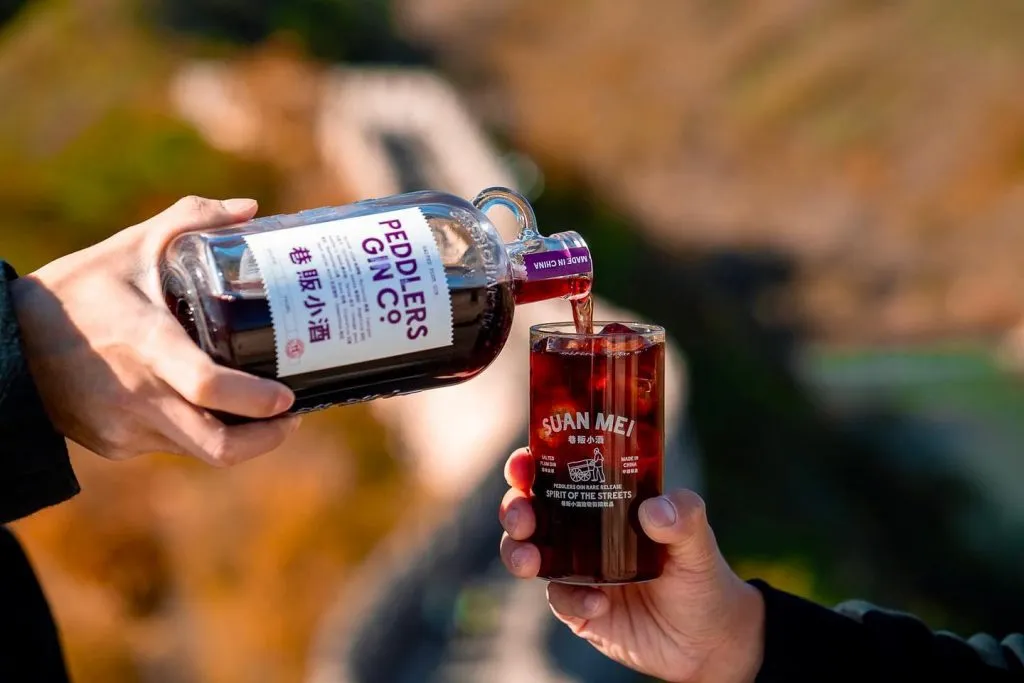
With its hero botanicals of Sichuan pepper and Buddha’s hand citrus, boutique brand Peddlers Gin highlights how distillers are taking inspiration from their country’s culinary DNA. Founder Fergus Woodward is keen to represent modern China in a bottle. “The brand was inspired by the creative energy coming out of China,” he says.
“We started as a group of friends in a garage on the backstreets of Shanghai, where you still find peddlers selling spices, teas, and herbs sourced from around China.” To build the brand, Woodward leaned on local bartenders. “Chinese bars are world class, and it’s great to see increasing recognition of them internationally,” says Hogan

%20%E2%80%94%20V1.jpeg)