
.svg)
.svg)
*this article first appeared on drinkstrade.com.au October 2025 - here
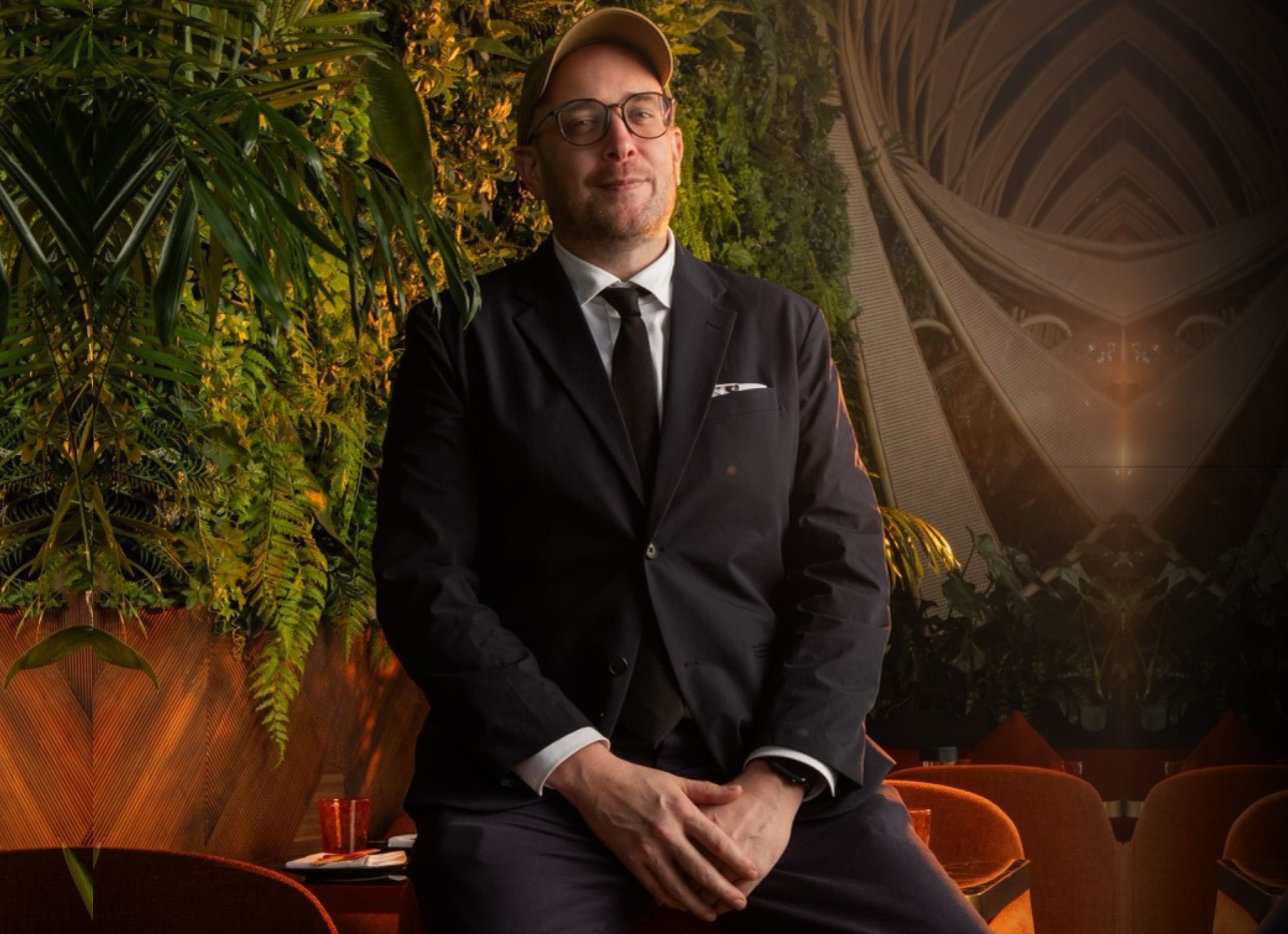
In 2015, Bobby Carey became the inaugural winner of Moutai’s Australian Enter the Dragon cocktail competition with his entry Banana Dynasty, a blend of Moutai Flying Fairy, banana liqueur, vermouth and bitters (scroll down for the full recipe)
Since then, Carey’s career has spanned a number of different roles, including six and a half years across various roles at Proof & Company in Singapore and more recently as the founder of Studio Ryecroft, a bar consultancy service. He is also a member of the Tales of the Cocktail Foundation's Education Advisory Committee and remains the Group Administrator of the Sydney Bartender Exchange.
With Moutai Enter the Dragon IV gearing up for its biggest instalment to date this December, Drinks Trade caught up with Bobby Carey to discuss his thoughts on Moutai and how his 2015 win has helped progress his career.
Drinks Trade: How would you describe yourself personally and professionally in two sentences?
Bobby Carey: I design bars and teams that last — my work is taking concepts to culture. Personally, I value connection, integrity, and the small rituals that bind people together; professionally, I try to translate those into venues and drinks that feel timeless.
DT: You won Moutai’s debut Australian cocktail comp in 2015… Where were you then and where are you now?
BC: I was 33, behind the stick at Earl’s Juke Joint in Sydney, already established but still looking to test myself. My winning cocktail, the Banana Dynasty, was about creating a shared experience – flavours like banana, vermouth, and bitters that felt recognisable and repeatable, but still framed Moutai as the star. Pasan Wijesena, the owner, backed me the whole way, and that support mattered. The experience also taught me how powerful texture and simplicity can be – the drink worked not because it was complicated, but because its structure made Moutai feel both approachable and memorable.
Since then, I’ve been based in Singapore, leading Studio Ryecroft and helping conceptualise bars such as Tiao at Mandarin Oriental Beijing, Virtù at Four Seasons Tokyo, and the St. Regis Bar Jakarta, to name a few. The focus now is broader: not only how spirits like Moutai are expressed, but how venues themselves can become part of how a city drinks and talks about hospitality.
DT: What opportunities have arisen for you since winning Enter the Dragon? Would you encourage other bartenders to take part?
BC: The win opened doors, from R&D projects and collaborations to education and speaking roles. But the real value was confidence: it confirmed that taking risks with flavour could lead somewhere. I’d absolutely encourage bartenders to enter. A good competition forces clarity, teaches you to articulate your voice, and leaves you sharper whether you win or not.
DT: What advice can you give to bartenders working with Moutai in this year’s cocktail comp? And, from your experience what flavour profiles do you feel complement baijiu?
BC: For novices, start with a classic template you trust – a Sour, a Negroni, an Old Fashioned – and add Moutai in measured doses alongside anchors like vermouth, bitters, or tropical fruit. For experienced bartenders, treat it as a high-impact spice. Use its intensity to test balance, and lean on your technical skills – texture, aroma, finish – to coax beauty from complexity.
Moutai is full of flavour compounds – esters, phenols, lactones, acids – and every bottle has a different emphasis. Tune into the note that excites you: it might be overripe pineapple, a creamy white-chocolate fat-wash, or a roasted pyrazine edge; the nutty, coffee-like character that comes from Maillard reactions, the same chemistry behind toasted bread crust or roasted cocoa. The key is not to mute it, but to find the compound that speaks to you and build around that.
DT: How has the use and consumption of Moutai/baijiu in Australia evolved over the past 10 years?
BC: Ten years ago, Moutai was mostly an unopened bottle on the back bar. Today it’s being used with intent: bartenders are integrating it in measured ways, and consumers are more willing to try it once it’s framed with context. It’s still niche, but the shift from novelty to curiosity is real. I remember early on when a guest ordered a second Moutai cocktail without hesitation – that was the signal to me that it had moved from novelty to something people genuinely enjoyed.
DT: Has Moutai/baijiu evolved in line with your own personal forecast?
BC: Partly. I expected wider consumer adoption by now, but the foundations are stronger than ever. Ten years ago, even in China, you rarely saw baijiu in serious cocktail bars; today, that’s changing fast. China is becoming a cocktail powerhouse in its own right, with cities of 10 million-plus setting trends from within, not following them.
Pioneers like Andrew and Bastien at Hope & Sesame have brought China’s creativity overseas, and venues like SanYou, now with multiple locations, show how baijiu can be categorised by aroma style and treated with real respect. What excites me most is the diversity: different aroma styles, regional traditions, and production methods mean baijiu isn’t one flavour but a whole category waiting to be explored globally. And beyond Asia, we’re seeing the first signs in the U.S., where baijiu cocktails are appearing on lists. That global adoption will only deepen.
DT: How has your use of Moutai/baijiu evolved over the same period?
BC: When I first worked with it, I leaned on bold strokes – headline cocktails, large measures, big flavours. Over time, I’ve become more nuanced. Now I use it the way you’d treat a ferment: sometimes just a touch can transform a drink’s finish or aroma. It doesn’t need to dominate the glass to leave its mark.
DT: What do you personally like about using Moutai in cocktails?
BC: It keeps you honest. Moutai is kaleidoscopic – smoky, fruity, lactic, nutty, floral – and it never lets you coast. When you find the right balance, it delivers drinks with real originality, the kind people remember.
DT: What are the challenges, misconceptions, and missed opportunities?
BC: The common misconception is that you need to soften or disguise Moutai. The challenge is showing that its complexity is an advantage. A missed opportunity is ageing: baijiu is one of the few spirits that continues to evolve in bottle, yet almost no work has been done to explore what might happen in glass, stainless, or oak. Even as a provocation, that kind of experiment could open a whole new chapter. It’s also a spirit that deserves more storytelling at the table – the same way we explain mezcal villages or whisky cask types, we could be giving guests insight into baijiu’s aroma families and heritage.
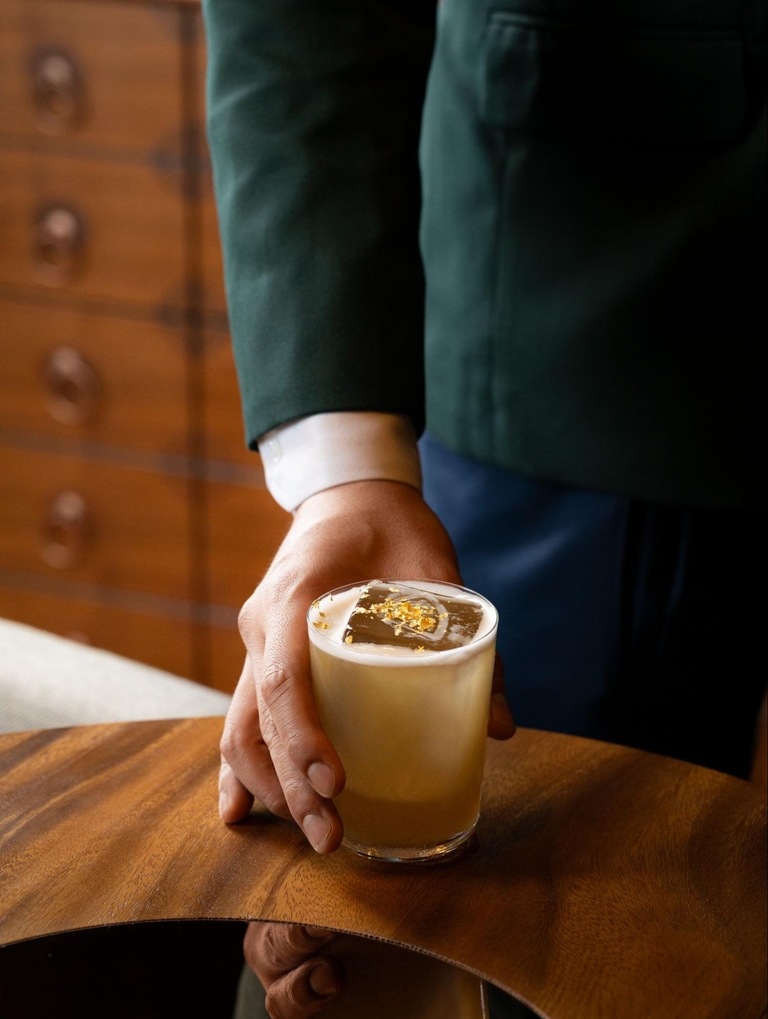
Banana Dynasty
INGREDIENTS:
- 40ml Moutai Flying Fairy
- 20ml Giffards Banana Du Bresil
- 15ml La Quintyne Vermouth Royal, Rouge
- 2 Dash Angostura Bitters
METHOD:
- Add all ingredients to a chilled mixing glass over ice and stir until perfectly chilled.
- Pour into a frosty cold Old Fashioned glass over crystal clear hand cut ice.
- Twist orange peel over the glass to release oils and place peel neatly twisted on the glass.

%20%E2%80%94%20V1.jpeg)